
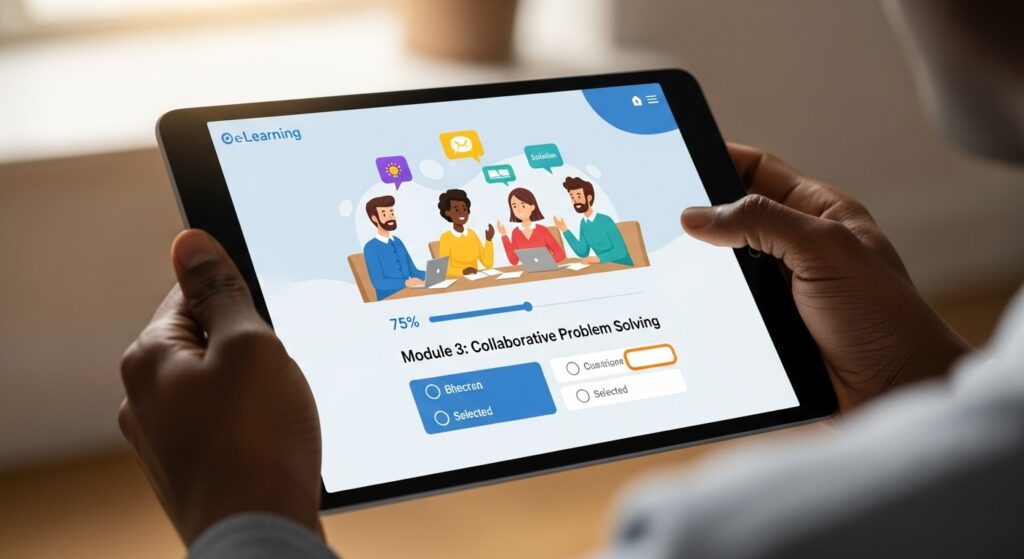
Walk into any classroom using a “gamified” learning app and watch what happens. Students click through questions. Earn points. Get a badge that says “Math Master!” Then… nothing. No excitement. No real engagement. Just another thing they had to do.
The badge sits there, meaningless. The points do not translate to anything they care about. And the actual learning? Lost somewhere between flashy animations and hollow rewards.
We have seen this across schools in Nigeria and beyond. Teachers are excited about gamification. Students are initially interested. Then everyone realises the emperor has no clothes. The games are not engaging, and students are not really learning.
The gamification industry loves to throw around success stories. “Students spent 300% more time on the platform!” “Engagement increased by 400%!” Sounds impressive until you ask the follow-up question: Did they actually learn anything?
Most gamified learning falls into what we call the “chocolate-covered broccoli” trap. You take something students find tedious (say, memorising multiplication tables), and you cover it in game mechanics. Points for correct answers! Badges for completing levels! Leaderboards to see who is “winning”.
But students are not stupid: they can tell when you are just trying to trick them into doing work. The broccoli is still broccoli, even with chocolate on it. And honestly? After a while, the chocolate coating starts to feel condescending.
Think about the games students actually choose to play in their spare time. Whether it is FIFA, Call of Duty, or even something simple on their phones, those games do not succeed because they offer badges. They succeed because they are genuinely engaging. There is meaningful progression. Real stakes. Competition that matters. Rewards that actually feel rewarding.
Most educational gamification misses all of that. Instead, we get generic point systems where points mean nothing beyond a number on screen. Badges that look like they were designed in 2005 and carry zero social currency. “Leaderboards” just make struggling students feel worse. Rewards are disconnected from anything students actually value.
The gap between what future-ready education tools promise and what they deliver becomes obvious fast. Students see through it. Teachers see through it. And the learning outcomes? They stay disappointingly flat.
Let us be specific about what goes wrong.
Meaningless rewards top the list. A digital sticker does not motivate a 12-year-old. Neither does a badge they earned by clicking through without trying. Research on intrinsic versus extrinsic motivation shows that extrinsic rewards only work when actually valued. A trophy existing only in an app nobody else sees? Not valuable.
We watched one school implement a popular gamified maths app where students earned “gems” to buy different colored avatars. Within two weeks, nobody cared about the gems. Why would they? No connection to their lives or interests.
No real stakes kills engagement fast. When there is no consequence to failure and no meaningful benefit to success, why try hard? One teacher told us, “Students just clicked through to get points without reading. They figured out they could earn badges whether they engaged or not. So they did not.”
The system rewarded activity, not learning. Students are smart enough to game any system purely by checking boxes.
Cultural disconnect matters too, especially in African contexts. Apps designed in Silicon Valley offer rewards that mean nothing to Nigerian or most African students. We have seen “grand prizes” for top performers being virtual tickets to American sports events that students had never heard of. When students in Abuja cannot relate to examples, when kids in Onitsha do not care about rewards, when competitive elements do not match how they actually interact, the whole system falls apart.
After sitting with enough students and teachers, patterns emerge about what creates real engagement (not the fake kind where students are active but not learning). The real kind where they are invested and actually absorbing material.
Students need control over their learning journey. Not complete freedom, but meaningful choices. Which topic to tackle next? How to approach a problem. When to challenge themselves versus practice fundamentals. Research on student engagement strategies consistently shows that autonomy increases both engagement and outcomes.
Students want to see themselves getting better in ways they can feel. Not “you have completed 47% of the course”, that is meaningless. More like, “you can now solve three-step equations you could not solve last week.” Concrete. Measurable. Connected to actual skills’ development.
Competition with purpose changes everything when done right. Not competition for its own sake, which demotivates students not naturally at the top. But fair competition gives everyone a real shot, creating energy and excitement rather than anxiety. Studies on gamification effectiveness show that well-designed competitive elements increase both engagement and learning outcomes. Tournaments between classmates. Challenges where students pick difficulty levels. Team competitions where different strengths matter.
Rewards that actually matter separate effective gamification from shallow gamification. What do students value? Recognition from peers and teachers. Things they can show parents. Prizes exist in the real world. Achievement carries meaning beyond the app. All these happen when rewards connect to students’ actual lives, top performers getting actual prizes they want, recognition classmates see and respect, progress parents can track and celebrate.
Overall, social elements amplify everything. Students want to see how they are doing compared to friends, share achievements, compete and collaborate with people they actually know. Real-world application ties it together. When students see how learning connects to their lives (to street game calculations, understanding their world, skills they will use, etc), engagement becomes natural, not manufactured.
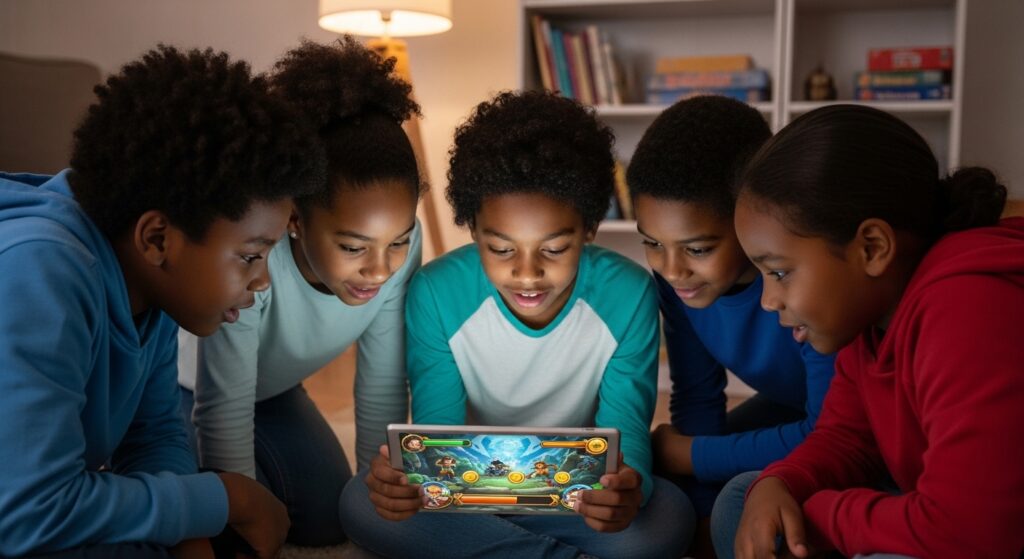
So what does effective gamification actually look like in practice? Let us get concrete, because theory only helps so much.
Tournaments with real prizes create immediate engagement. Not theoretical competitions, not leaderboards that reset every week with no consequence, actual tournaments where winning means something. Students in Enugu competing for school supplies. Kids in Port Harcourt playing for books they choose themselves. Teenagers in Lagos competing for data bundles or recognition at school assembly.
The prizes do not have to be expensive. They have to matter to students. And the tournament structure has to be fair enough that students believe they have a real shot, even if they are not the absolute top performer in their class.
Peer challenges work differently from solo play, tapping into how students naturally interact. Challenge your classmate to beat your quiz score. Form teams and compete for the greatest collective improvement. Work together to achieve a class goal that nobody could reach alone.
One teacher in Ibadan told us about transforming her Friday review sessions into team challenges. Same content she had always taught. Same learning objectives. But now students were strategising together, encouraging each other, staying focused on ways she had never seen before. The game mechanics did not replace the learning; they enhanced it.
Progress tracking that students can actually see and understand makes abstract improvement concrete. Not “you are 73% through the unit”, that means nothing. But “you have mastered comparing fractions, you are getting better at adding them, and you are ready to start multiplying them.” Clear. Specific. Connected to actual competence, they can feel themselves developing.
The rewards students want vary by context, but they share common elements: social recognition, tangible benefits, and connection to students’ real lives. Educational games that drive real results understand this principle. The rewards might be different in different settings, but they are always meaningful to the specific students using the platform.
Context-relevant content matters just as much as the game mechanics. A quiz about concepts students are actually studying, using examples from their lives, feels fundamentally different from generic educational games. When the maths problems reference Nigerian currency, when science questions connect to local plants and animals, and when reading passages reflect students’ experiences, the whole thing works better.
We saw this at a school in Calabar, where students suddenly started voluntarily practising quizzes after school. Why? The quizzes were directly helping them prepare for tests they cared about, using the same curriculum language their teachers used, with examples that made sense to them. The gamification provided structure and motivation, but the content had to be relevant first.
We have talked about what does not work and what principles matter. Now, let us discuss how we have applied this in building something that works for African students.
Safari App’s gamified learning platform started from one observation: students in Nigerian schools put enormous energy into things they care about. Football. Dance competitions. Debates. They are not unmotivated; they just need to care about what they are doing. We launched in 2020, and we can proudly say we understand gamification more than anybody. Here is how we differ:
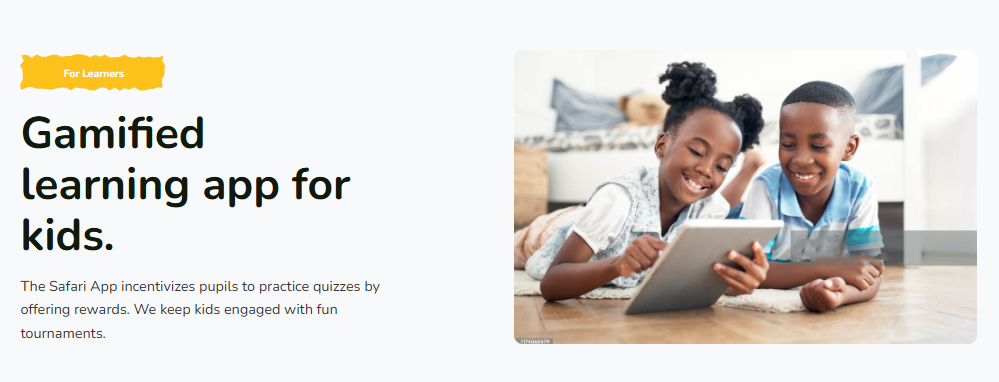
Tournaments (or what we call duels) create competition that students genuinely invest in. Not abstract leaderboards, actual tournaments with brackets, real opponents, prizes that matter. Students practice more because they want to perform when it counts. Tournament results are public, classmates watch, and winning means something. The structure levels the playing field, too. We focus on improvement, consistency, and participation.
Rewards students value took time to figure out. We talked to them. They wanted things to show parents, recognition friends would see, and actual prizes they could use. So we built that: tournaments with real rewards, progress parents can track, achievements carrying weight beyond the app.
Curriculum-aligned quizzes solve the “chocolate-covered broccoli” problem. Students are not playing random games disconnected from school. They are practicing exact curriculum content. Game mechanics make practice engaging, but the practice directly helps their actual schoolwork and exams. When tournament practice helps class performance, when quiz results correlate with test scores, the system gains credibility.
Progress tracking creates accountability for students, visibility for parents, and data for teachers. Everyone has the information they need, presented clearly.
Social elements matter because learning happens in a community. Students compete with classmates they know, see friends’ progress, celebrate wins together, and maintain friendly rivalries with real people in their lives.
Built for the African context runs through everything. The interface works on the devices students have. The system handles intermittent connectivity. Content reflects Nigerian curricula with relevant examples. Rewards align with what matters in African school cultures. Research on educational technology in African contexts shows that locally-adapted solutions consistently outperform generic global platforms.
We are not claiming perfection; there is always more to learn. But early results tell us something is working. Students are practising voluntarily. Teachers report better engagement. Parents are seeing improvement in confidence and test scores.
If you are a school looking to implement gamified learning that actually works, partner with Schoola and let us talk about what makes sense for your specific context. Because the best educational technology is not one-size-fits-all, it is responsive to the real needs of real students and teachers.
At the core, remember this: gamification is a tool, not a goal. The goal is learning. Deep understanding. Skills students carry forward. Confidence in their own abilities. Curiosity that persists beyond any point system or badge collection.
Get that right, and the game mechanics become what they should be: a way to make the journey more engaging without losing sight of the destination. Get it wrong, and you are just adding complexity to the same old problems.
Students deserve better than shallow gamification. They deserveto learng experiences that respect their intelligence, understand their context, and genuinely help them grow. That is what we should all be building toward. Want to talk about how to make it happen in your school? Contact us, we are always learning from teachers doing this work on the ground.